|
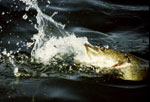
Jeg synes gedden er en fascinerende fisk. Smuk, men alligevel lidt uhyggelig med sit tandbesatte gab og sine dødbringende ædevaner. Skønheden og udyret i samme fisk. Ligeså let den kan være at fange på en god dag, ligeså umulig kan den være på en dårlig. Er der nogen fisk der er kendt for at have markante hugperioder, så er det gedden. Jeg har mange gange oplevet hvordan en sø virker død i timevis, for pludselig at give den ene gedde efter den anden. Et omslag i vejret er ofte det der sætter skub i fiskene, andre gange sker der bare pludselig noget på en ellers død dag. Min indtil videre største gedde er en 121 cm. fisk fra Blekingekysten i Sverige, oktober 2004. Ugen efter gav en på117 cm. Derudover fik jeg en på mere end 110 cm. (ca. 11 kg.) i marts 2003. Adskillige stærke Laplandsgedder er det blevet til på fluen med en 117 cm. som den største. Herhjemme er min største gedde fra februar 2002, på omkring (eller måske over) 8 kg. fanget på flue. Ellers er det blevet til mange fine gedder bl.a. på Esrum Sø op til 7,5 kg. På Esrum Sø har jeg to gange haft fat i meget større gedder der desværre begge er stået af, men dem man mister er jo altid de største, og dem der spøger i hukommelsen. |
|
GEDDEFLUE:
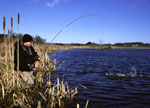 Geddefluefiskeri er top underholdning, hvis man kan lide fuld flex på klingen. Selve hugget er brutalt, ikke noget nippen her. Når gedden tager, så gør den det ordentligt. Som regel føles det som et tungt bundhug, der straks bliver levende. Selve fighten er som regel ikke specielt vild, selvom en gedde ind i mellem kan levere et udløb eller to. Strømvandsgedder fighter som regel en hel del mere end gedder fra stillestående vand med længere og hurtigere udløb.
 |
|
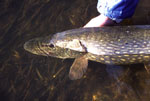 Landingen kan til gengæld være ganske nervepirrende, specielt hvis man håndlander gedderne, hvad jeg selv foretrækker. Gedden går som regel amok når den nærmer sig fiskeren, spærrer gabet op og ryster hovedet i overfladen. Landingen bør selvfølgelig være så skånsom som muligt, hvis man vil genudsætte fisken. "Gællegrebet", hvor man lister hånden ind langs gællelåget og op til forkanten af gællebuerne og forsigtigt løfter fisken ud af vandet fungerer fint. Det er oftere én selv, end gedden der kommer til skade ved denne landingsmetode. Jeg genudsætter stort set alle gedder. Er der en der kommer til skade spiser jeg den selvfølgelig.
 |
|
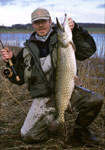 Grejet kan være almindeligt kystgrej i klasse 7/8 eller 8/9, med et kort skydehoved, eller en WF- line, der kan bære de store fluer. Forfanget bør mindst være 30 cm. 1,0 mm. nylon eller tynd wire. Et par meter 1,0 mm. sat direkte i fluelinen med loop til loop, fungerer fint og sikrer mod at linen beskadiges hvis gedden ruller med åben mund. En lang krogløsertang er et "must".
 |
|
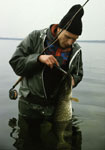 Fluerne bør bindes af materialer der suger så lidt vand som muligt. Ellers bliver de ubehagelige eller ligefrem umulige at kaste. Flashfluer fungerer forrygende. Et stort bundt forskellig flash giver en heftig effekt, og suger ikke vand. Blander man holografisk flash i, ser fluen faktisk ud som om den fylder langt mere end den gør. Et par kuglekædeøjne eller anden let belastning får fluen ned, men udgør ikke noget kasteproblem.
 |
|
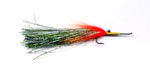 Krogen bør være med stort kroggab, stærk og skarp. Selv har jeg brugt Kamasan medium heavy vådfluekroge str. 2 og 4 eller Partridge enkelt lowwater laksefluekroge i str.1/0 og 2/0, og de har kroget gedderne perfekt.
 |
|
Tilbage...
|
|
|