|
At der findes ligeså mange fluer som der findes fiskere, skal nok passe, for det er jo underholdende at binde nye fluer og måske finde en superflue der altid fanger fisk. Fluer som f.eks. ”Grå Frede”, ”Magnus”, ”Juletræet” og andre klassikere går man til gengæld aldrig helt fejl af. Min egen flueæske er en stor rodebunke af forskellige eksperimenter, mange af dem har aldrig været bundet på forfanget. Jeg har mine fire ”sikre” fluer, der giver fisk året rundt, og det er dem der sidder på forfanget i 99% af tiden. Der findes mange flotte og ”fancy” fluer, der sikkert også fanger fisk, men mit princip har altid været at fluen gerne skulle imitere et fødeemne, være lynhurtig at binde og kunne fange fisk. Og det opfylder de følgende fluer. |
|
Foto: Michael G. Olsen
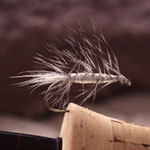 DRÆBERREJEN: Hesterejeimitation. Denne flue er siden den blev beskrevet i Fisk & Fri no. 9 - 1996 blevet en ”klassiker” og stort set alle der har prøvet den, har den som en fast ”killer” i flueæsken. Den transparente plast imiterer hesterejens glasklare krop rigtig godt (hvilket de færreste andre rejeimitationer kan siges at gøre) og giver et specielt lys eller "skær" i vandet. Fluen er beskrevet flere steder, bl.a. flere steder her på nettet, i Thomas Vinges ”Havørred på kysten 2” og senest har jeg set den i et tysk fiskeblad. Og den fanger fisk, også når de fleste andre fluer bliver ignoreret. Krog: Streamer eller lang vådfluekrog str. 2-10. Bindetråd: hvid (eller tynd nylon). ”Hale” (nærmere rejens hoved); en lille dusk hvid eller cremefarvet polarræv og spidsen af grizzlyhacklefjeren. Krop: klar plastpose, en suveræn plast er fra ”ølposer”, fås ind i mellem på tankstationer eller hos købmænd, ellers er blød plastpose af kraftig kvalitet udmærket. Fryseposer har det med at blive ”sølvfarvede”, i stedet for gennemsigtige, når de strammes til om krogen. Plasten skæres eller klippes i lange 2 - 4 mm. brede strimler. Når plasten er viklet om krogen så der opstår en ”taperet” rejekrop strammes den om krogen ved at vride den i samme retning som den er bundet på. Derved opnås at plasten bliver fuldstændig gennemsigtig. Klar Epoxy er en anden mulighed. Hackle: grizzlyfarvet hacklefjer der strippes for fibre på den ene side. Hacklet bindes ind, så spidsen indgår som en del af halen (rejens hoved). For at sikre at hacklet ikke skrider på den glatte plast, lakeres kroppen, og hacklet tørnes op over kroppen i den stadig våde lak. Der følges efter med bindetråden. Vil du belaste fluen så gør det med kobbertråd på den forreste tredjedel af krogen.
 |
|
Foto: Michael G. Olsen
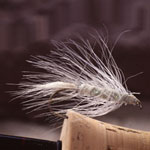
”DEN HVIDE”: Provoflue/ reje ”Den hvide” er faktisk forløberen for ”dræberrejen”, og har holdt sin plads i flueæsken siden den fangede de første ørreder i 1993. Den kan være uhyggeligt effektiv, specielt om efteråret, hvor den ofte slår alt andet. Som min gode ven Jan Larsen udtalte det; den flue skulle fandeme forbydes….. Krog: streamer eller vådfluekrog str. 2 - 8. Bindetråd: hvid. Hale (nærmere rejens hoved) lille bundt blød hvid polarræv. Krop: irisfolie/ regnbuefolie (bruges til dekoration) der klippes i ca. 3 - 4 cm. brede strimler, eller Lite Brite / Angelhair dubbing/ Flashabourør. Da folien er meget ”sprød” og let knækker er det nødvendigt at sno strimlen inden den tørnes op over krogen. Hackle: blød hvid langfibret hacklefjer. Efter hacklet er tørnet følges efter med bindetråden som rib for at sikre fjeren bedst muligt. Lav både nogle ubelastede til lavt vand og roligt vejr, og nogle belastet på den forreste tredjedel af krogen til bølger og dybt vand. En "turboversion" med lidt ekstra glimmer i form af f.eks. lidt opsplittet mylarrør / flashabourør som et sparsomt løst "hackle" anvender jeg ofte, specielt hvis der er lidt grums i vandet eller "røre i suppen". |
|
Foto: Michael G. Olsen
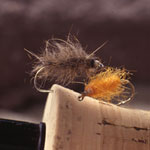 TANGLOPPE: (BRUN, ORANGE, RØD) En lille flue, men den er meget effektiv. Besværlige fisk bliver lidt lettere med en af disse på forfanget. Til hornfisk er den dødelig, og til multer er den en af de sikreste. Krog: vådflue str. 6 - 12. Krop: Lidt dubbing i brun, orange, rød eller naturfarvet dubbes på tråden, eller spindes i en dubbingtwister og tørnes op over krogen. Dubbingen prikles ud med en dubbingnål, så den får lidt ”ben” og et busket udseende. Fluen kan evt. forsynes med rib, men det er ikke nødvendigt. Lav et par belastet med kobbertråd til dybt fiskeri eller bølger.
 |
|
Foto: Michael G. Olsen
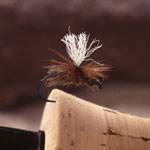 TØRFLUE: Tangfluer, strandfluer mm. En tørflue bør ikke mangle, den kan redde en ellers helt umulig dag. Se nærmere beskrivelse under “havørred” andetsteds på siden. Krog: tørfluekrog str. 10 - 14. Hale (kan udelades): hacklefibre, hår eller lignende. Krop: mørk dubbing. ”Vinge” hvid polygarn eller antrongarn (gør fluen let at se og giver noget at binde hacklet omkring). Hackle: kvalitets tørfluehacklefjer, der tørnes vandret om vingeroden.
 |
|
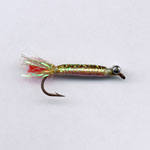 HUNDESTEJLE: Fiskeimitation Når jeg en sjælden gang anvender en fiskeimitation er det oftest denne vellignende hundestejleflue. Hundestejler er ”stive” fisk der ikke bevæger kroppen meget når de svømmer, og derfor ligner denne flue perfekt forbilledet. Krog: streamer str. 2 - 10. Hale: evt. lidt rødt uldgarn (kan udelades) og enden af flashabourøret. Krop: pearl (eller anden farve) flashabourør med garn eller lignende under som fyld. Man kan variere kroppens farve ved at lægge forskellige farver under røret. Ryg: mørkgrøn twinklehair eller lignende, der bindes ind ved halen midt på twinklehairbundet, der inden kuglekædeøjnene bindes på lægges dobbelt og føres frem mod hovedet og bindes fast. Belastning. Kuglekædeøjne og evt. kobbertråd på den forreste del af krogen.
 |
|
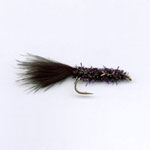
BØRSTEORM: Imitation Denne flue er ikke helt ”færdigudviklet”, men har allerede bevist at den kan fange fisk ved flere lejligheder. Der findes mange fine børsteormsimitationer, men mange af dem er besværlige at binde, det er denne ikke. For at marabouhalen ikke skal vikle sig rundt om krogbøjningen under kast har jeg forskudt halens indbindingspunkt bagud, ved at binde et stykke meget kraftig nylon der er brændt i enden ind på krogen først. Den kugle der opstår på nylonen sikrer marabouhalen mod at blive trukket eller slået af fluen. Det næste skridt i ”udviklingen” af fluen bliver at der monteres en kortskaftet vådfluekrog (eller en let lille trekrog) på nylonen i marabouhalen, for at undgå at fiskene blot bider i halen på fluen. Krog: str. 4 - 6, gerne lang streamerkrog. Hale: marabou. Krop: sort eller brun cactuschenille. Belastning: kobbertråd. Nylonen klemmes med en tang, så den bliver rillet og bindes ind på krogen så kuglen sidder ca. 3 - 4 mm. bag indbindingspunktet, eller cirka på linie med den bageste del af krogbøjningen. Kobbertråden vikles om krogskaftet som belastning. Herefter bindes marabouen fast på nylonen der stikker bagud. Cactuschenillen bindes ind bagest på krogen og tørnes bagud over nylonen, og frem igen over hele krogen, hvorefter den klippes ned til en passende tykkelse. Problemet med fluen er at ørrederne ind i mellem tager den ganske forsigtigt bagfra. På grund af den forholdsvis lange marabouhale (og den store krog) vil man ofte kun mærke et træk i fluen, uden at fisken bliver kroget.
BEMÆRK: De sidste par år har jeg derfor bundet fluen som tandemflue i stedet, med to enkeltkroge forbundet med kraftig nylon (0,60 - 1,0 mm.). Nylonen er klemt med en tang så den bliver rillet og bindes fast med (mange) stramme tørn på begge kroge (evt. belastning på den forreste krog). En lille marabouhale bindes ind og både krogskaft og nylon lakeres før cactuschenillen vindes op over hele herligheden bagfra. Der følges efter med bindtråden for at sikre chenillen. Chenillen klippes ned og der laves et svagt knæk midt på nylonen. Dette svage knæk gør at fluen, ved langsom indtagning, roterer og svajer langsomt gennem vandet og derved ligner en børsteorm ganske godt. Godt nok til at ørrederne tager den, og bliver hængende..... (Foto følger senere) |
|
Tilbage...
|
|
|